
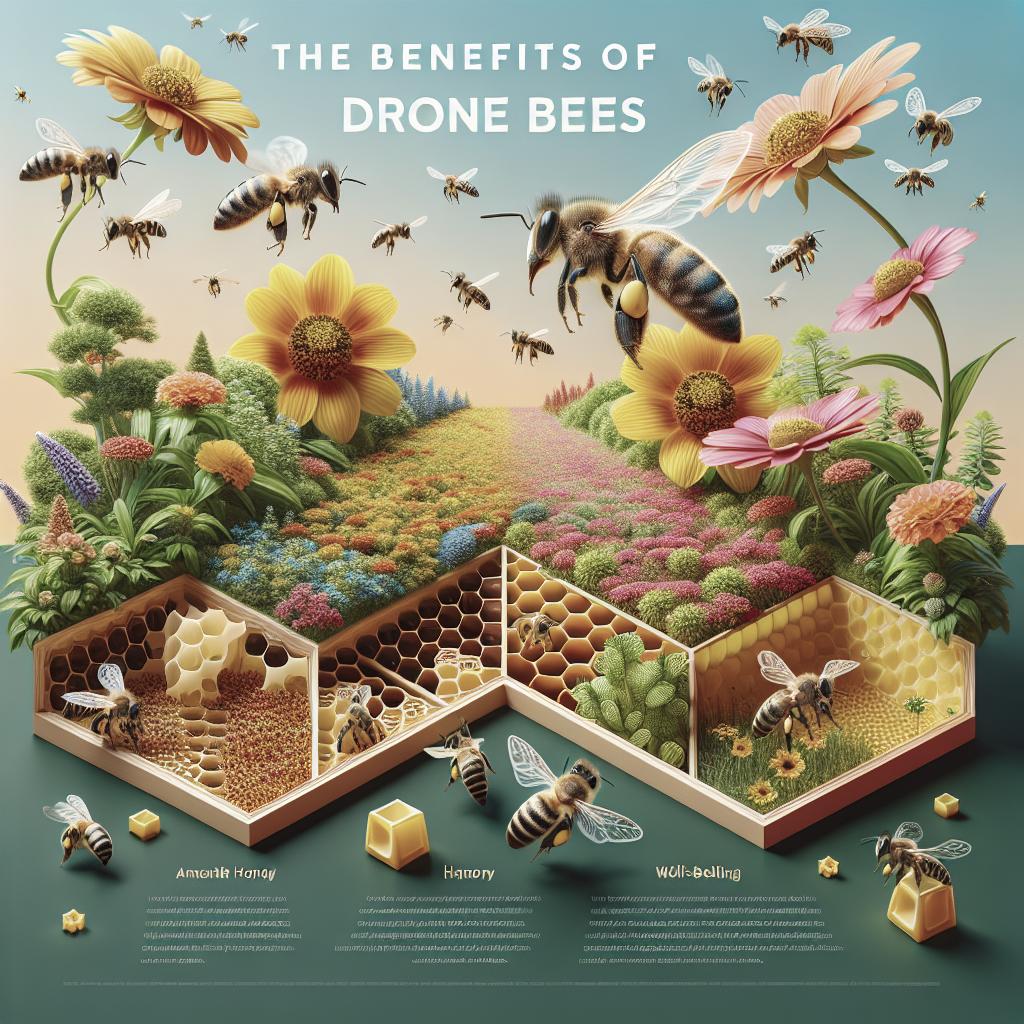
Bees have fascinated humans for centuries, not only for their intricate social structures but also for the indispensable roles they play in our ecosystem. Among the different types of bees, drone bees hold a unique and vital position. While often overshadowed by the more industrious worker bees, drones contribute significantly to bee colonies’ success and genetic diversity. This blog post will explore the life cycle of drone bees, their relationship with honey and pollen, and their crucial role in the beehive. By the end, you’ll understand why drone bees are indispensable to the intricate world of bees and beehives.
Life Cycle
Drone bees have a distinct life cycle that sets them apart from worker bees and the queen. Unlike the female worker bees, drones are male and are birthed from unfertilized eggs. A queen bee lays drone eggs in larger brood cells specifically designed for drones. These eggs hatch into larvae, which are then fed by worker bees until they pupate and develop into mature drones.
Drones’ primary purpose is to mate with a queen bee. After around 24 days from when the egg is laid, the drone bee emerges and takes a few more days to mature before flying out to drone congregation areas. Mating usually happens mid-air, and a drone’s life typically culminates in this act. If a drone does not mate, they still serve critical functions within the hive until the arrival of colder months when their expulsion from the hive ensures the colony’s survival.
Honey
While drones do not gather nectar or produce honey directly, their presence is crucial for the stability and genetic diversity of the hive, which in turn affects honey production. A robust bee colony, facilitated by healthy drone populations, can thrive and produce substantial amounts of honey. Essentially, a hive with a diverse gene pool, thanks to the different drones the queen mates with, will fare better in various environmental conditions.
Additionally, drones help maintain the internal environment of the hive, indirectly supporting the worker bees responsible for honey production. Their consistent internal hive temperature regulation efforts keep the hive in optimum condition for honey storage and prevent the hive from overheating or becoming too cold. This stability ensures that worker bees can efficiently produce and store honey, contributing to the overall success of the hive.
Pollen
Similarly to honey, drone bees themselves don’t collect pollen. Nonetheless, they contribute to optimal pollen storage and utilization by ensuring the hive’s healthy balance. By allowing for genetic diversity, drones play an integral role in creating stronger, more resilient colonies. This resilience is essential for effective pollination activities carried out by worker bees.
Furthermore, the presence of drone bees within the hive helps to stabilize the purity levels of pollen reserves. An efficient and productive queen, supported by a healthy number of drones, ensures that her progeny —the worker bees— are well-equipped to forage for pollen effectively. These thriving offspring can then gather and store ample pollen, securing the hive’s nutritional needs and future food reserves.
Role of Drone Honeybee in the Beehive
Understanding the full scope of the drone bee’s role within the hive underscores its importance. Primarily, drones are responsible for mating with the queen bee, ensuring genetic diversity and long-term survival of the colony. This genetic variety aids the overall health and adaptability of the hive, prepping it for challenges such as diseases and fluctuating environmental conditions.
Drones also have a more passive but equally vital role in the social structure of the beehive. Their presence influences worker bee behaviors and hive dynamics. Worker bees are known to expel drones during colder months to conserve resources, highlighting that drones’ presence within warmer seasons is advantageous for the hive’s functioning. These behavioral and structural contributions cannot be understated, and they cement the drone bee’s status as more than just a reproductive agent.
Leave A Comment Cancel reply
We hope this exploration into the world of drone bees has shed light on their indispensable role within the beehive ecosystem. Whether indirectly supporting honey and pollen production or ensuring the genetic diversity of the colony, drones are integral to a thriving hive. We encourage our readers to share their thoughts and experiences with us. Have you observed drone bees in action? What are your thoughts on their contributions to hive health and productivity?
Next Steps:
| Aspect | Details |
|---|---|
| Life Cycle | Drones are male bees birthed from unfertilized eggs, with a key role in mating and contributing genes. |
| Honey | Although drones don’t produce honey, they help maintain a stable hive environment crucial for honey production. |
| Pollen | Drones don’t collect pollen but enable genetic diversity, which enhances the efficiency of pollen collection by worker bees. |
| Role in Beehive | Drones ensure genetic diversity through mating, and their presence influences hive dynamics and worker behavior. |

