
“`html
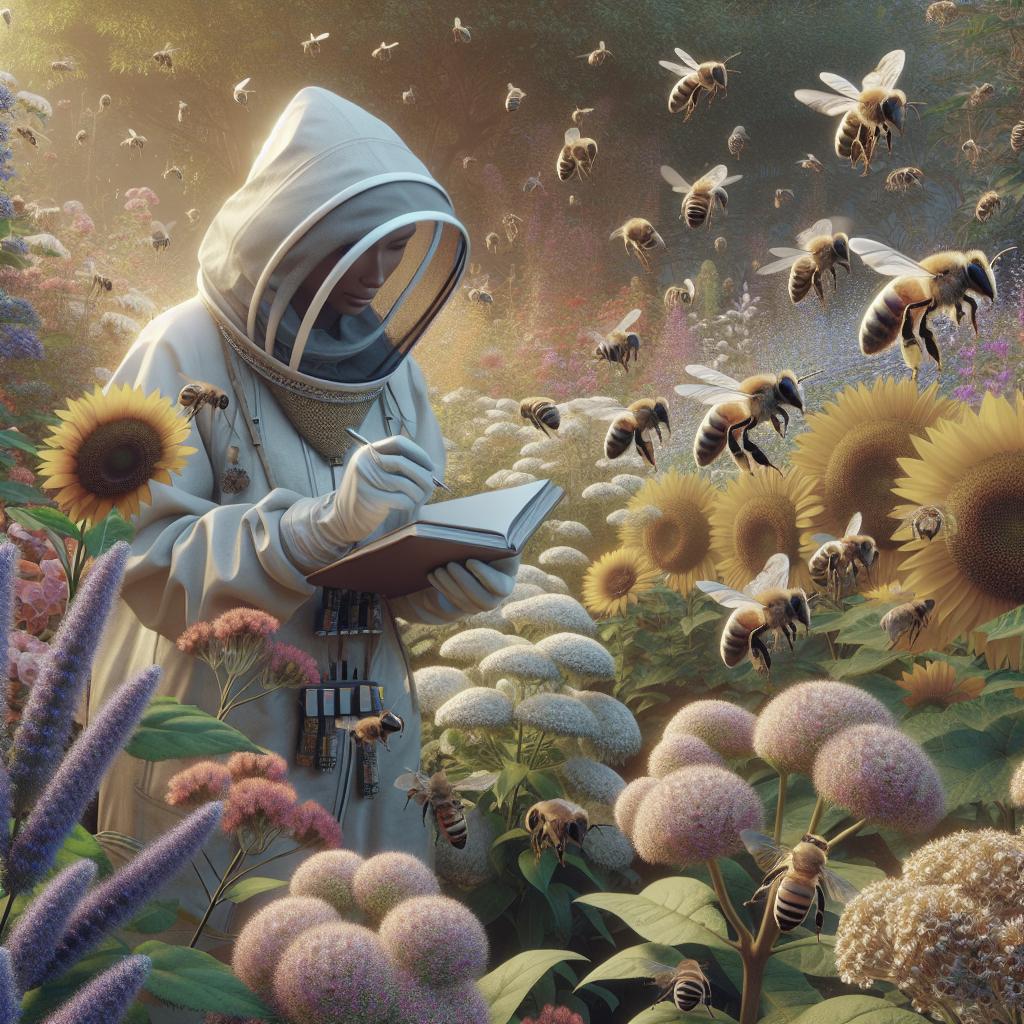
Bees are fascinating creatures with complex behaviors and social structures that have intrigued scientists and nature enthusiasts for centuries. Understanding how bees communicate, interact within their hives, and find food can provide valuable insights into their roles in ecosystems and their importance in pollination. This blog post will delve into the roles different bees play in the hive, how bees perceive and interact with flowers, and how they communicate with each other through various methods. By observing these behaviors, we can not only appreciate the intricacies of bee life but also contribute to their conservation.
Bees’ Roles in the Hive
Queen Bees
The queen bee is the matriarch of the hive, her primary role being to lay eggs. She can lay up to 2,000 eggs per day during peak seasons. Her presence is vital for the cohesion and productivity of the hive, as worker bees rely on her pheromones to maintain social order and effective functioning. Observing a queen bee involves noting her interactions with worker bees and her egg-laying process.
Additionally, queen bees engage in a unique courtship flight where they mate with several drone bees to ensure genetic diversity within the hive. Researchers observe these flights to understand reproductive behaviors and genetic influences on hive health. Tracking the queen’s movements and health is crucial for beekeepers aiming to maintain strong, productive colonies.
Drone Bees
Drone bees are the male bees of the hive, and their main function is to mate with a virgin queen. Unlike worker bees, drones do not have a stinger and cannot collect nectar or pollen. During the mating season, drones venture out of the hive and congregate in drone congregation areas where they await the opportunity to mate with a queen. Observing drones can provide insights into reproductive strategies and the genetic health of bee populations.
Post-mating, drones typically die, as mating is their sole purpose. For the remaining time in the hive, they are cared for by worker bees. Observing drones within and outside the hive helps researchers understand their life cycles and their role in the genetic diversity and health of bee populations.
Worker Bees
Worker bees are the backbone of the hive, performing numerous tasks such as foraging for nectar and pollen, caring for the queen and brood, building and repairing the hive, and protecting it from intruders. Observing worker bees involves studying their highly organized division of labor and their communication methods, such as the waggle dance, which they use to inform other bees about the location of food sources.
Worker bees exhibit age-based task allocation, with younger bees working inside the hive while older bees transition to foraging duties. By observing these behaviors, scientists can gain a deeper understanding of hive dynamics, efficiency, and the impact of environmental stresses on bee populations.
How Bees See Flowers
Touch
Bees play a crucial role in pollination by interacting with flowers. They use their antennae and other sensory organs to assess the quality and availability of nectar and pollen. Observing how bees touch and handle flowers can shed light on their preferences and foraging efficiencies. These observations help researchers develop strategies to support bee populations and enhance pollination.
Moreover, the tactile feedback bees receive from flowers helps them remember and recognize flowers that offer high rewards. Studying this behavior can reveal much about their learning and memory capabilities, which are essential for their role in pollination.
Dance Language
Round Dance
The round dance is a form of communication used by worker bees to indicate the presence of food sources close to the hive (within 50 meters). When a bee performs the round dance, it moves in a circular pattern, which signals other bees to search for food in the vicinity. Observing this dance offers insights into how bees communicate spatial information and coordinate foraging efforts.
By studying the round dance, researchers can understand how bees save time and energy by efficiently spreading information about nearby resources. This type of communication is a testament to the hive’s collaborative nature and the bees’ ability to work together for the colony’s welfare.
Waggle Dance
The waggle dance is a more complex form of communication that conveys information about the direction and distance of food sources that are farther from the hive. The dancing bee waggles its abdomen and moves in a figure-eight pattern, with the angle of the waggle run indicating the direction relative to the sun. Observing the waggle dance allows scientists to decode the intricate messages bees share about foraging locations.
This dance is an extraordinary example of non-verbal communication and spatial cognition in insects. Researchers can analyze the precision of these dances to understand how environmental factors like weather and landscape affect bee navigation and foraging success.
Odor Cues or Pheromones
Bees also use odor cues or pheromones to communicate. These chemical signals play a vital role in various hive activities, including foraging, defense, and coordinating brood care. Observing how bees release and respond to pheromones can help us understand their social structure and collective decision-making processes.
Pheromones are crucial for maintaining hive harmony and guiding bees in their tasks. Researchers study these chemical signals to develop methods for managing bee populations and enhancing their resilience against threats such as pests and diseases.
Vibration and Sound
Bees use vibration and sound as communication tools within the hive. Worker bees produce vibrations by moving their wings or body in specific ways to convey messages related to foraging, hive maintenance, or queen care. Observing these vibrations helps researchers decode the subtle forms of communication that contribute to hive cohesion and efficiency.
Sound signals are also used, particularly by queen bees, to assert dominance or during swarming. By studying these acoustic signals, scientists can gain insights into the complex social hierarchy and communication networks that sustain hive life.
Talking to People
Observing bee behavior is not just about watching the bees; it also involves communicating your findings with people. Sharing knowledge about bee behavior can help raise awareness about the importance of bees and the challenges they face. Beekeepers, researchers, and hobbyists all play a role in this knowledge-sharing process.
Engaging with communities through workshops, talks, and online platforms can foster a greater appreciation for bees and inspire collective efforts to support their conservation. By translating complex scientific observations into accessible information, we can build a more informed and supportive public.
Lessons Learned
| Aspect | Observations |
|---|---|
| Queen Bees | Egg-laying, interactions with workers, mating flights |
| Drone Bees | Mating behaviors, congregation areas, life cycle |
| Worker Bees | Foraging, hive maintenance, communication via dances |
| Touch | Interaction with flowers, learning, and recognition |
| Round Dance | Communication about nearby food sources, hive cooperation |
| Waggle Dance | Conveying direction and distance of distant food sources |
| Odor Cues or Pheromones | Foraging, defense, brood care coordination |
| Vibration and Sound | Hive communication, social hierarchy, swarm signals |
| Talking to People | Sharing findings, raising awareness, community engagement |
“`

