
“`html
Bees are crucial to our ecosystems as they are efficient pollinators for many of the plants we love and depend on. Despite having minimal garden space, you can still create a bee-friendly haven that supports these vital insects. In this guide, we’ll explore practical tips to help bees thrive, identify plants that attract them, and provide a step-by-step plan to design a bee-friendly garden. Additionally, we’ll show you how to make your own DIY bee house and share sustainable practices for garden maintenance. Finally, we’ll discuss the numerous benefits bees bring to your garden and offer advice on treating bee stings. Let’s dive in and make our little spaces buzz with life!
Four tips to help bees
First, plant a variety of native flowers that bloom during different seasons. Bees need nectar and pollen throughout the year, so having plants that blossom at staggered times ensures they have a continuous food supply. Focus on adding perennials since they bloom yearly, reducing the need for replanting.
Second, avoid using pesticides. Pesticides can be harmful to bees, even in small amounts. Instead, opt for organic gardening methods such as beneficial insects or natural pest repellents like neem oil. This keeps your garden a safe haven for bees.
Third, provide a water source. Bees need water for hydration, cooling their hives, and feeding their larvae. A small, shallow dish filled with water and pebbles can act as a reliable water source. Change the water frequently to prevent stagnation.
What plants attract bees to your garden?
Among the best plants to attract bees are lavender, borage, and sunflowers. Lavender, with its elongated flowers and pleasing scent, is highly attractive to bees. Planting borage can boost your garden’s bee population since it has a high nectar content. It is also aesthetically pleasing and edible!
Sunflowers are not only striking but also function as bee magnets. Their large blooms offer ample pollen and nectar. Additionally, herbs like thyme, oregano, and rosemary serve dual purposes; they’re culinary delights and bee favorites.
Integrate a mix of annuals, perennials, vegetables, and herbs. This variety keeps your garden vibrant while catering to the diverse preferences of bees. You can enjoy a fragrant and colorful garden while supporting essential pollinators.
Bee Friendly Garden Design
In designing a bee-friendly garden, prioritize diversity and layering. Layer your plants by arranging taller ones in the back and shorter ones in front. This increases foraging efficiency for bees and optimizes space usage. Create small clusters of the same plant species because bees are more attracted to larger patches of flowers than isolated blooms.
Use vertical space by implementing trellises or container stacking to offer more blooming surfaces. Consider hanging baskets with trailing plants to provide additional nectaring spots. Vertical gardening techniques can maximize your minimal space, ensuring you accommodate a wide variety of plants.
Low-maintenance options include raised beds or containers with good drainage. These methods require less space and effort, making them ideal for anyone, even those with only a small balcony or patio. With some creativity, you can design a compact yet impactful bee-friendly garden.
How to create a DIY bee house?
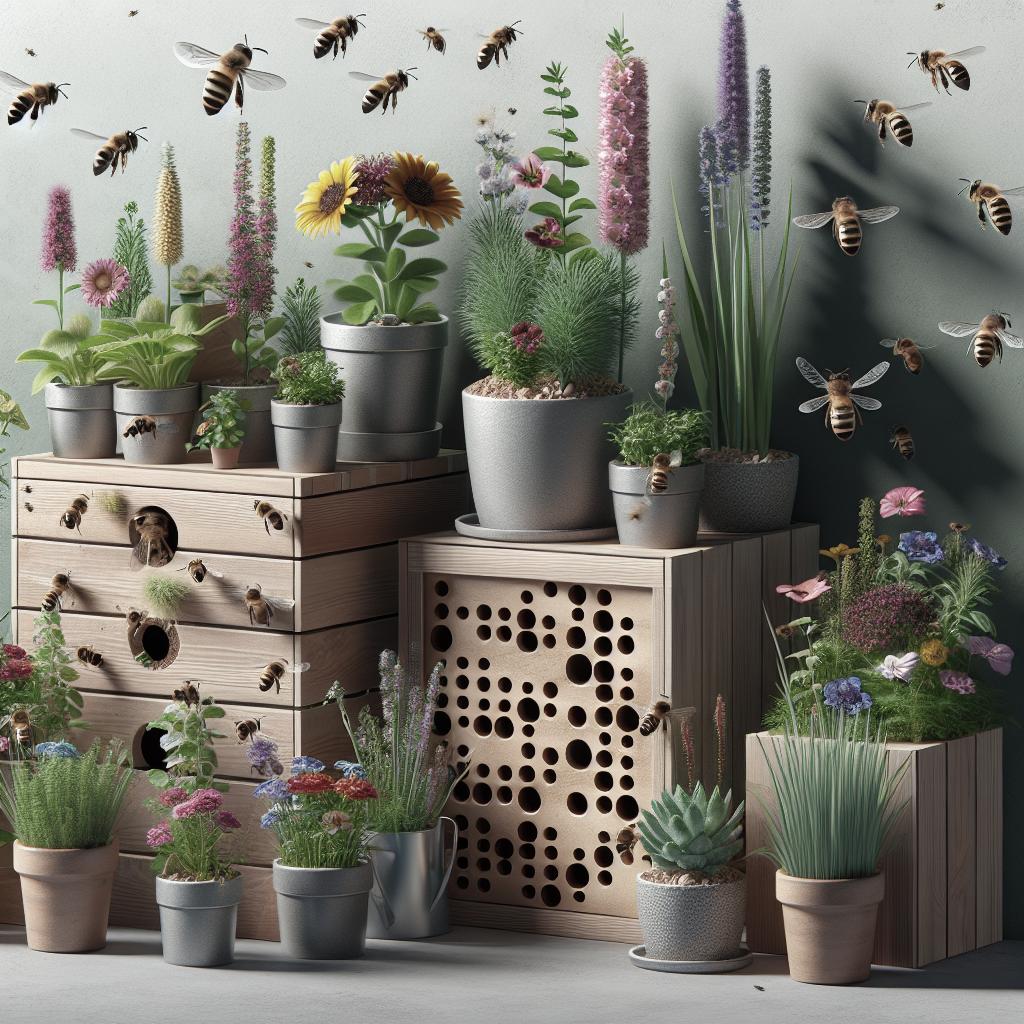
Creating a DIY bee house is a fun and effective way to support solitary bees. Start by gathering materials like untreated wood, bamboo canes, or hollow reeds. Cut the bamboo or reeds into segments about 10-15 cm long and make sure they’re smooth inside to avoid damaging the bees.
Bundle the segments together tightly and secure them within a wooden frame or old birdhouse. Hang the bee house in a sunny, sheltered spot, ideally facing south or southeast. Elevate it off the ground and ensure the entrance stays dry to protect from moisture and predators.
Maintain your bee house by cleaning it annually and replacing damaged tubes. This upkeep ensures that it remains a safe nesting site for bees year after year, contributing even more to their well-being.
Sustainable Practices To Create a Bee-Friendly Garden
Embrace sustainable practices such as composting to enrich your soil naturally. Compost adds vital nutrients without chemical additives, resulting in healthier plants that attract more bees. You can create compost from kitchen scraps, garden clippings, and coffee grounds.
Conserve water by using rain barrels to collect and store rainwater. Use this water for irrigation, reducing reliance on treated tap water and saving resources. Mulch your plants to retain moisture, regulate soil temperature, and prevent weed growth.
Incorporate native plants which are well-suited to your local climate and need less water. Native plants often form symbiotic relationships with indigenous bees, enhancing the ecological balance. Sustainability aligns with supporting bees, ensuring that our actions benefit the planet long-term.
What are the benefits of bees for your garden?
Bees play a pivotal role in pollination, which is essential for fruit and vegetable production. By supporting bees, your garden can yield more abundant and healthier produce. Enhanced pollination results in more fruits and seeds, directly benefiting your garden’s productivity.
Additionally, bees contribute to the broader ecosystem by supporting diverse plant life. More plant diversity can attract other beneficial insects, promoting a balanced garden ecosystem. This ecological balance reduces the need for chemical interventions, fostering a naturally thriving environment.
Lastly, a bee-friendly garden can enhance your connection to nature. Observing bees at work is both educational and therapeutic, offering a sense of accomplishment and well-being. Encouraging bees enriches your garden visually, environmentally, and experientially.
How to treat a bee sting?
If you get stung by a bee, remain calm. First, remove the stinger promptly using a flat-edged object like a credit card. Avoid squeezing the stinger as it may release more venom. Once the stinger is removed, wash the area with soap and water to prevent infection.
Apply a cold compress to reduce swelling and alleviate pain. Over-the-counter pain relievers or antihistamines can help manage symptoms. If you know you are allergic to bee stings, always carry an epinephrine auto-injector and seek medical attention immediately after a sting.
Keep an eye out for signs of a severe allergic reaction, such as difficulty breathing, swelling of the face or throat, or dizziness. These symptoms require urgent medical intervention. Most bee stings are manageable at home, but it’s crucial to act fast and monitor your body’s response.
You may also enjoy:
- 10 Ways to Attract Pollinators to Your Garden
- Natural Pest Control: Eco-Friendly Solutions for Your Garden
- Beginner’s Guide to Container Gardening
Summary of Main Points
| Section | Key Takeaways |
|---|---|
| Four tips to help bees | Plant a variety of native flowers, avoid pesticides, provide a water source |
| What plants attract bees to your garden? | Best plants include lavender, borage, sunflowers, herbs |
| Bee Friendly Garden Design | Prioritize diversity, use vertical space, and opt for low-maintenance options |
| How to create a DIY bee house? | Use untreated wood and bamboo, place in sunny, sheltered spot, annual maintenance |
| Sustainable Practices To Create a Bee-Friendly Garden | Composting, water conservation, mulch, native plants |
| What are the benefits of bees for your garden? | Pollination improves productivity, supports ecosystem balance, and enhances connection to nature |
| How to treat a bee sting? | Remove stinger, clean area, use cold compress, monitor for allergic reactions |
“`

